Compassionate Care Nursing: Supporting the Person, Not Just the Diagnosis
October 7, 2026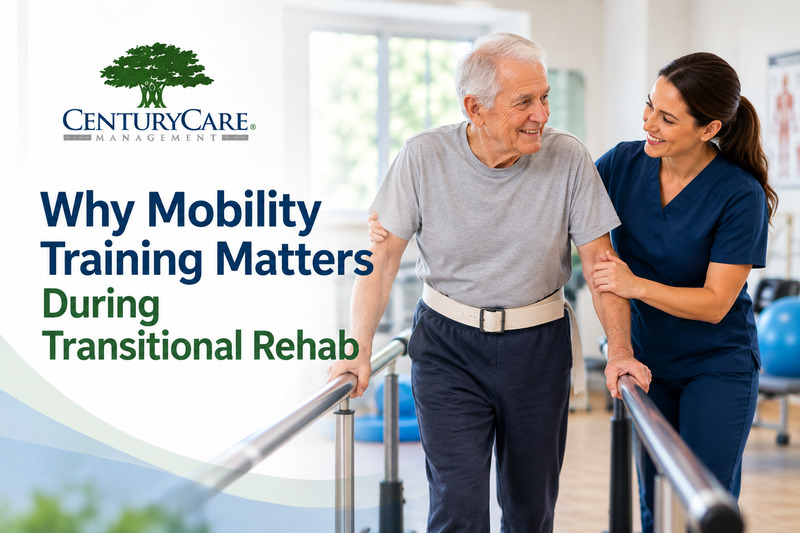
Leaving the hospital is an important milestone, but going home isn’t always the immediate next step.
After surgery, a serious illness, an injury, or an extended hospital stay, some patients discover that everyday movements they once took for granted suddenly require much more effort. Standing up from a chair may feel difficult. Walking across a room can be tiring. A few steps at the front door may become a significant obstacle, and even getting in and out of bed can require assistance.
For patients who aren’t quite ready to safely manage these activities at home, transitional rehab can provide additional time and professional support to continue the recovery process. At Century Care Management, Inc., serving families right here in Cary and across central North Carolina, mobility training is an important part of that rehabilitation. It focuses not simply on movement for the sake of exercise, but on rebuilding the strength, balance, endurance, and functional skills people use throughout an ordinary day. Whether a patient is recovering at a comprehensive rehabilitation center following surgery or rebuilding strength after hospitalization, mobility training helps connect rehabilitation goals with the activities that matter outside the therapy setting.
Jump To Section
After the Hospital
Why Does Mobility Often Decline After Hospitalization?
A person doesn’t have to spend weeks in a hospital bed to notice changes in mobility. Illness, surgery, pain, medications, and reduced activity can all affect strength and endurance. Older adults may be particularly vulnerable to deconditioning when they’re less active than usual.
By the time someone is medically stable enough to leave the hospital, the condition that brought them there may be improving while their ability to move safely is still limited. Families often notice changes like these:
A person who previously walked independently might now need a walker.
Someone who managed stairs every day may feel unsteady on a single step.
Even standing long enough to get dressed can be exhausting.
These changes are one reason discharge planning considers more than medical stability. If someone can’t safely perform the movements required at home, additional rehabilitation may be recommended before they return.
Strength With Purpose
Mobility Training Helps Rebuild Functional Strength
Strengthening exercises can be part of rehabilitation, but mobility training goes a step further by connecting strength with movement.
Think about standing from a chair. It requires leg and core strength, balance, coordination, and the ability to shift body weight appropriately. Improving strength can make the movement easier, but patients may also need to practice the movement itself. The same principle applies to getting out of bed, stepping into a shower, walking down a hallway, or getting into a car.
During transitional rehab, therapists can identify which movements are difficult and develop an individualized plan based on the patient’s current abilities, medical condition, precautions, and goals. Rather than focusing only on how much weight someone can lift or how many repetitions they can complete, rehabilitation can consider a more practical question.
What does this person need to be able to do during everyday life?
Steady on Your Feet
Balance and Coordination Are Essential for Safe Movement
Strength is only one piece of mobility. Balance and coordination help people remain stable while standing, walking, turning, reaching, and moving between different surfaces. A person may have enough strength to walk but still feel unsteady when changing direction or navigating an unfamiliar environment.
Rehabilitation may address two kinds of balance:
Static balance involves maintaining stability while relatively still, such as standing at a bathroom sink.
Dynamic balance becomes important when the body is moving, such as stepping around an obstacle or turning to sit in a chair.
Therapists may also work with patients who use walkers, canes, or other assistive devices. Learning to use these devices appropriately can be an important part of moving more safely and confidently.
At rehabilitation centers in North Carolina, the specific mobility goals will vary from one patient to another. The appropriate approach depends on each person’s condition, starting abilities, and expected next level of care.
Real-Life Practice
Everyday Movements Become Part of Rehabilitation
Walking is important, but successful mobility involves much more than covering a certain distance. Throughout a normal day, people constantly change positions and navigate their surroundings. We get out of bed, stand from chairs, use the bathroom, reach for objects, step over thresholds, and move through different rooms. These are known as functional movements because they directly relate to daily life.
Within skilled nursing facility rehabilitation services, therapy may include:
Practicing transfers between a bed and chair
Standing from different surfaces
Walking with an assistive device
Navigating obstacles
The goal is to make rehabilitation relevant to what the patient will actually need to do after discharge. For example, walking 100 feet in a hallway may be a meaningful accomplishment, but if the patient must climb several steps to enter their home, stair navigation may also need attention. Similarly, someone who lives alone may need different functional abilities than a patient returning home with consistent caregiver support.
Step by Step
Stair Training Can Be an Important Step Toward Home
Stairs deserve special consideration because they’re common in home environments and can present a significant challenge after illness or surgery. A patient may have steps leading to the front door, a bedroom on the second floor, or even a small threshold between rooms.
When appropriate for the patient’s condition and rehabilitation plan, therapists may incorporate stair or step training. This can involve:
Practicing safe technique
Improving the strength needed to step up and down
Working on balance
Learning how to use handrails or an assistive device appropriately
Not every patient needs to master a full staircase before leaving rehabilitation. Goals should reflect the actual environment and available support. That’s why information from patients and families can be so valuable during discharge planning.
Moving With Control
Transfers Matter More Than Many Families Realize
Transfers are another important component of mobility training. A transfer simply means moving from one position or surface to another, such as getting from the bed to a chair or moving from sitting to standing. These movements happen repeatedly throughout the day.
If someone has difficulty standing from a chair, they may also struggle with toileting, getting out of bed, or sitting down safely for a meal. Improving transfer ability can therefore affect several areas of independence at once.
Therapists may evaluate how much assistance a patient requires and work toward greater independence when appropriate. Progress may mean moving from substantial hands-on assistance to needing less help, improving technique, or performing the movement with better control.
Improvements in transfers can be just as meaningful as increasing walking distance.
Mind and Body
Mobility Training Can Help Rebuild Confidence
A decline in mobility can affect confidence as well as physical ability. Someone who has fallen may be afraid it will happen again. A person recovering from joint surgery may hesitate to put weight through the affected area even when activity has been cleared. After a long hospitalization, simply standing up can feel intimidating.
Fear can sometimes cause people to avoid movement, which may make returning to everyday routines even more challenging. A rehabilitation setting provides opportunities to practice movements with appropriate professional guidance. As patients repeat activities and begin recognizing their own progress, confidence may gradually return.
That doesn’t mean encouraging someone to ignore precautions or attempt unsafe activities. Instead, confidence should grow alongside improved technique, appropriate assistance, and better awareness of current abilities.
Tracking Progress
Measuring Mobility Progress Beyond Walking Distance
Families often ask how far a loved one walked during therapy, but distance is only one measure of mobility. Therapists may also consider balance, endurance, movement quality, safety, and the amount of assistance required.
A patient might walk the same distance two weeks in a row while still making meaningful progress. Signs of progress can include:
Needing significant assistance the first week but only minimal support the second
Completing the distance without a rest break, or using a walker with better control
Standing long enough to complete grooming
Transferring with less assistance, or safely turning to sit in a chair
The broader goal of mobility training is functional movement, not simply accumulating steps.
Discharge Planning
Preparing for a Safer Transition Home
One of the most important purposes of transitional rehab is preparing patients for what comes next. As discharge approaches, the rehabilitation team can consider the patient’s mobility, daily activities, medical needs, home environment, and available support. Families can help by sharing practical details about the home:
How many steps lead to the entrance?
Is the bedroom upstairs?
Is there a bathtub or walk-in shower?
How far is the bathroom from the bedroom?
Will someone be available to provide assistance?
These details help make rehabilitation goals more relevant. Depending on individual needs, discharge recommendations may also include assistive equipment, home health services, continued therapy, caregiver assistance, or medical follow-up.
Preparing for home isn’t about making someone perfectly independent in every activity. It’s about understanding what they’ll need to manage and putting appropriate supports in place.
Coordinated Care
The Role of Skilled Nursing and Rehabilitation
Patients recovering after hospitalization may have needs that extend beyond mobility. Alongside therapy, some individuals require skilled nursing support for:
Medication management
Wound care when ordered
Monitoring of medical conditions
Other physician-directed services
This is where skilled nursing facility rehabilitation services can provide a coordinated approach. Nursing and rehabilitation professionals can communicate about factors that affect recovery, including pain, fatigue, medical changes, or mobility concerns. When different disciplines understand the same goals, care can remain focused on helping the patient prepare for the next stage of recovery.
Our Approach
Mobility Training at Century Care
At Century Care, rehabilitation is centered on the individual needs, abilities, and goals of each patient. For people transitioning from the hospital, mobility training can help address the functional skills needed to participate more fully in everyday activities. Depending on individual needs, that may include:
Strengthening and balance training
Walking, transfers, and endurance
Practicing movements that will be important after discharge
Families comparing rehabilitation centers in North Carolina should ask how therapy plans are individualized and how the rehabilitation team prepares patients for their next transition. Understanding how a facility approaches mobility, nursing care, family communication, and discharge planning can provide valuable insight into the rehabilitation experience.
Recovery isn’t simply about being able to walk farther than yesterday. It’s about rebuilding the abilities that make everyday life possible.
For one person, that may mean climbing the steps into their home. For another, it may mean getting out of bed independently, walking safely to the bathroom, or standing long enough to prepare a simple meal. Mobility training helps turn those real-life goals into meaningful parts of the rehabilitation process, one movement at a time.
Common Questions
Frequently Asked Questions About Mobility Training and Transitional Rehab
What is mobility training during transitional rehab?
Mobility training focuses on movements needed for everyday life, including standing, walking, transfers, balance, endurance, and navigating different environments. During transitional rehab, therapy is individualized based on the patient’s medical condition, current abilities, precautions, and discharge goals.
Why is mobility training important after a hospital stay?
Hospitalization, surgery, illness, and reduced activity can contribute to weakness and decreased endurance. Mobility training can help patients work on strength, balance, walking, transfers, and other functional movements they may need as they return to daily activities.
Does mobility training only involve physical therapy?
Physical therapy often plays an important role in mobility training, but rehabilitation can involve several disciplines. Occupational therapy may address everyday activities such as dressing, bathing, and other functional tasks, while nursing professionals may manage clinical needs that can affect a patient’s participation in rehabilitation.
How do therapists know when someone is ready to return home?
There is no single test that determines whether every patient is ready to leave rehabilitation. The care team may consider mobility, ability to complete daily activities, medical needs, home environment, caregiver support, safety, and progress toward individualized goals. Discharge planning should reflect the patient’s specific circumstances.
What should families ask when comparing rehabilitation centers in North Carolina?
When comparing rehabilitation centers in North Carolina, ask about available therapy and nursing services, how rehabilitation goals are individualized, how progress is measured, how families are involved, and how discharge planning works. Families can also ask how skilled nursing facility rehabilitation services address the specific mobility and care needs their loved one may have after hospitalization.
Planning the Next Step After a Hospital Stay?
Our team in Cary is here to talk through rehabilitation goals, skilled nursing support, and discharge planning for your loved one. Schedule a visit or call us at 919-467-8686.